
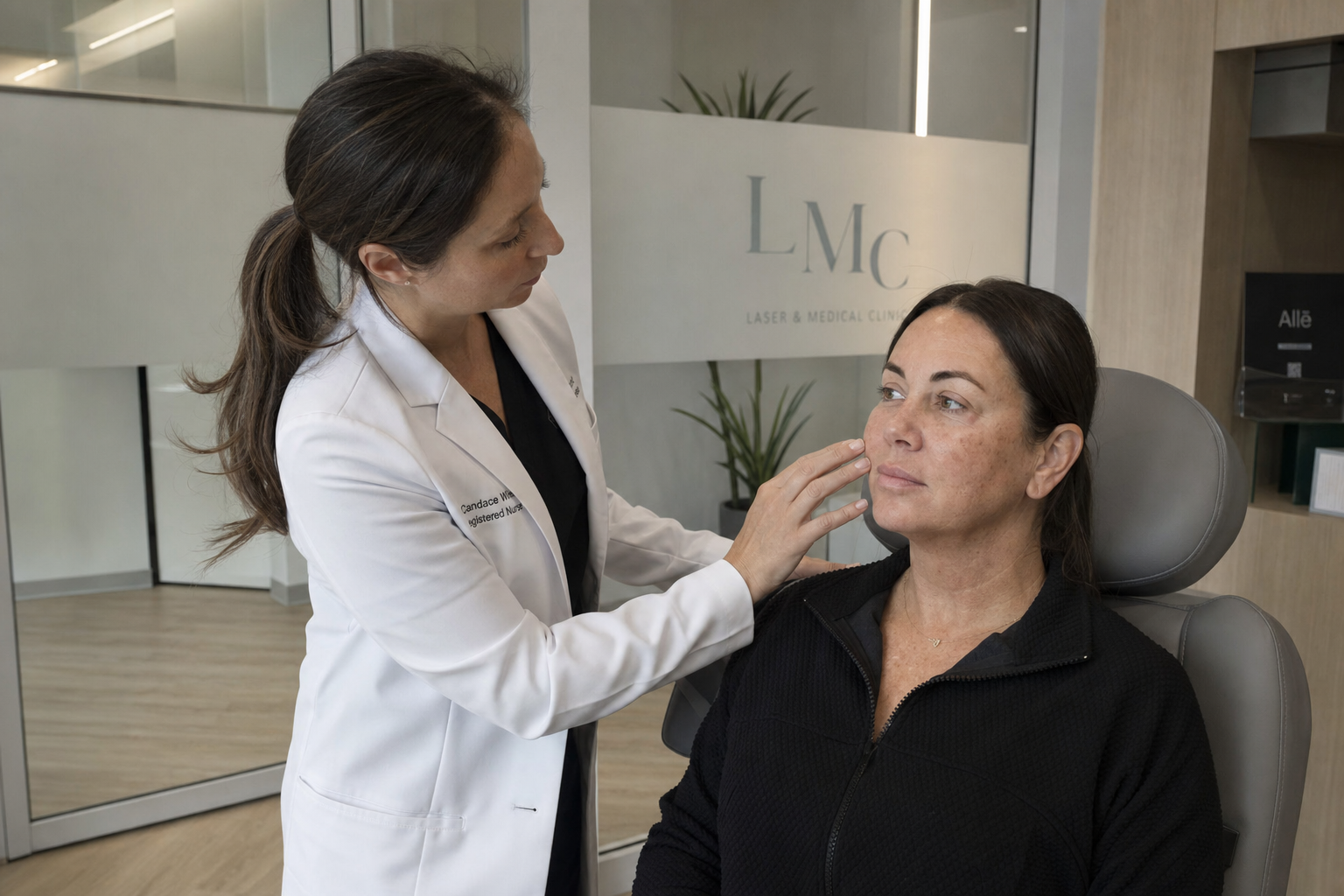
Melasma and pigmentation respond best to a patient, layered approach: strict sun protection, evidence-based skincare, and carefully chosen in-clinic treatments. Here's how to fade them safely.
Pigmentation is one of the most common — and most misunderstood — skin concerns we see at KatiFACE. Melasma in particular can feel frustrating because it's stubborn, prone to relapse, and easily worsened by the wrong treatment. The good news: with a patient, layered approach, most pigmentation can be meaningfully improved. Below is our nurse-led framework for fading it safely.
What causes melasma and pigmentation?
Melasma and most pigmentation are driven by overactive melanocytes producing excess pigment, triggered mainly by UV and visible light, hormones, heat, and inflammation. Understanding your trigger matters because it shapes the safest treatment plan.
Melasma typically appears as symmetrical brown or grey-brown patches on the cheeks, forehead, and upper lip. It's strongly linked to hormones (pregnancy, oral contraceptives) and sun exposure. Other pigmentation — like sun spots (solar lentigines) and post-inflammatory hyperpigmentation after acne or injury — behaves differently and often responds faster.
Why is melasma so easy to make worse?
Melasma is uniquely reactive: aggressive lasers, heat, and inflammation can trigger a rebound that leaves skin darker than before. This is why a cautious, conservative approach almost always wins.
Unlike a simple sun spot, melasma has a "memory." Overly hot or ablative treatments can stimulate melanocytes rather than calm them. At a boutique clinic, we'd rather under-treat and reassess than overpromise a fast fix that backfires. Individual results always vary.
What is the single most important step to fade pigmentation?
Daily, disciplined sun protection is the foundation — without it, no treatment will hold. Broad-spectrum SPF that also shields against visible light is essential for melasma.
Use a broad-spectrum mineral or tinted sunscreen (iron oxides in tinted formulas help block visible light) at SPF 30–50, reapplied through the day. Hats and shade matter too, even in Toronto winters and through windows. We help clients choose the right daily medical-grade skincare and sunscreens to build a routine that actually protects the results you're working toward.
Which skincare ingredients safely fade pigmentation?
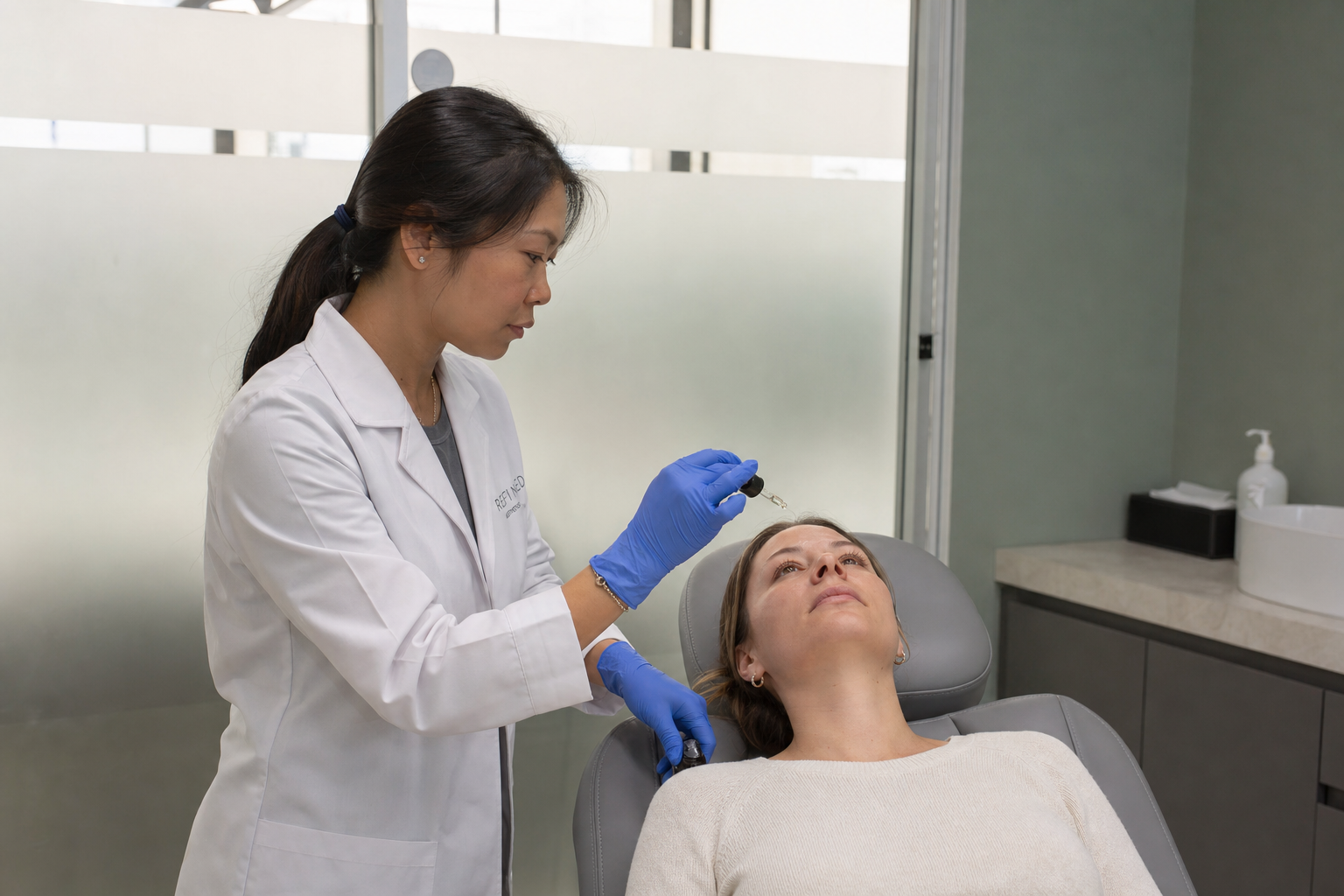
Evidence-based topicals that regulate pigment include tyrosinase inhibitors and antioxidants — such as tranexamic acid, azelaic acid, niacinamide, vitamin C, and cysteamine, alongside gentle retinoids.
These work gradually over weeks to months by slowing pigment production and encouraging healthy turnover. Prescription-strength options like hydroquinone can be effective but should be cycled under professional guidance to avoid irritation and rebound. A calm, non-irritating routine is the goal; aggressive scrubbing and harsh actives often make pigmentation worse.
What in-clinic treatments help fade melasma and pigmentation?
Gentle, low-heat energy devices and select light-based treatments — chosen for your specific pigment type — can accelerate results when paired with skincare and sun protection.
For sun spots and general pigmentation, lasers and devices such as photofacials and gentle resurfacing can be very effective. For true melasma, we favour conservative, controlled approaches and often avoid hot lasers entirely, sometimes using gentle radiofrequency microneedling or low-energy protocols. Because the wrong device can worsen melasma, an in-person assessment is non-negotiable — you can book a consultation to determine what's genuinely safe for your skin.
How long does it take to fade pigmentation?
Most people see gradual improvement over 8–12 weeks with consistent skincare, with continued gains over several months. Melasma is managed long-term rather than cured.
Patience protects your skin. Expect maintenance rather than a permanent finish line, especially with melasma, which can return with sun exposure or hormonal shifts. This reflects our philosophy at KatiFACE: supporting your skin thoughtfully over time, not chasing an aggressive quick fix.
When should you see a professional?
See a qualified provider before starting treatment if pigmentation is new, changing, asymmetrical, or unresponsive to skincare — and always to rule out anything concerning.
A proper assessment distinguishes melasma from other pigmentation and screens for anything that needs a dermatologist's attention. Our nurse-led team builds a personalized, layered plan across skincare and appropriate in-clinic care.
FAQ
Frequently asked questions
Can melasma be cured permanently?
Melasma is typically managed rather than cured. With sun protection, targeted skincare, and appropriate gentle treatments, it can fade significantly, but it can recur with UV exposure or hormonal changes, so ongoing maintenance is expected.
Are lasers safe for melasma?
Some are, but many aggressive or hot lasers can worsen melasma by triggering a pigment rebound. Only conservative, carefully chosen protocols should be used, which is why an in-person assessment is essential before any device treatment.
Does sunscreen really matter if I stay indoors?
Yes. Visible light from screens and windows, plus incidental UV, can trigger melasma. Daily broad-spectrum SPF, ideally a tinted formula with iron oxides, is the single most important step for lasting results.
How soon will I see results?
Most people notice gradual improvement over 8 to 12 weeks with consistent skincare, with further gains over several months. Individual results vary and depend on the type and depth of pigmentation.
What's the safest first step if I'm unsure whether it's melasma?
Book a professional assessment. A qualified provider can distinguish melasma from sun spots or post-inflammatory pigmentation and design a plan that won't inadvertently make it worse.
Considering treatment? Kati offers thoughtful, personalized consultations in Yorkville.
Reserve Your Consultation