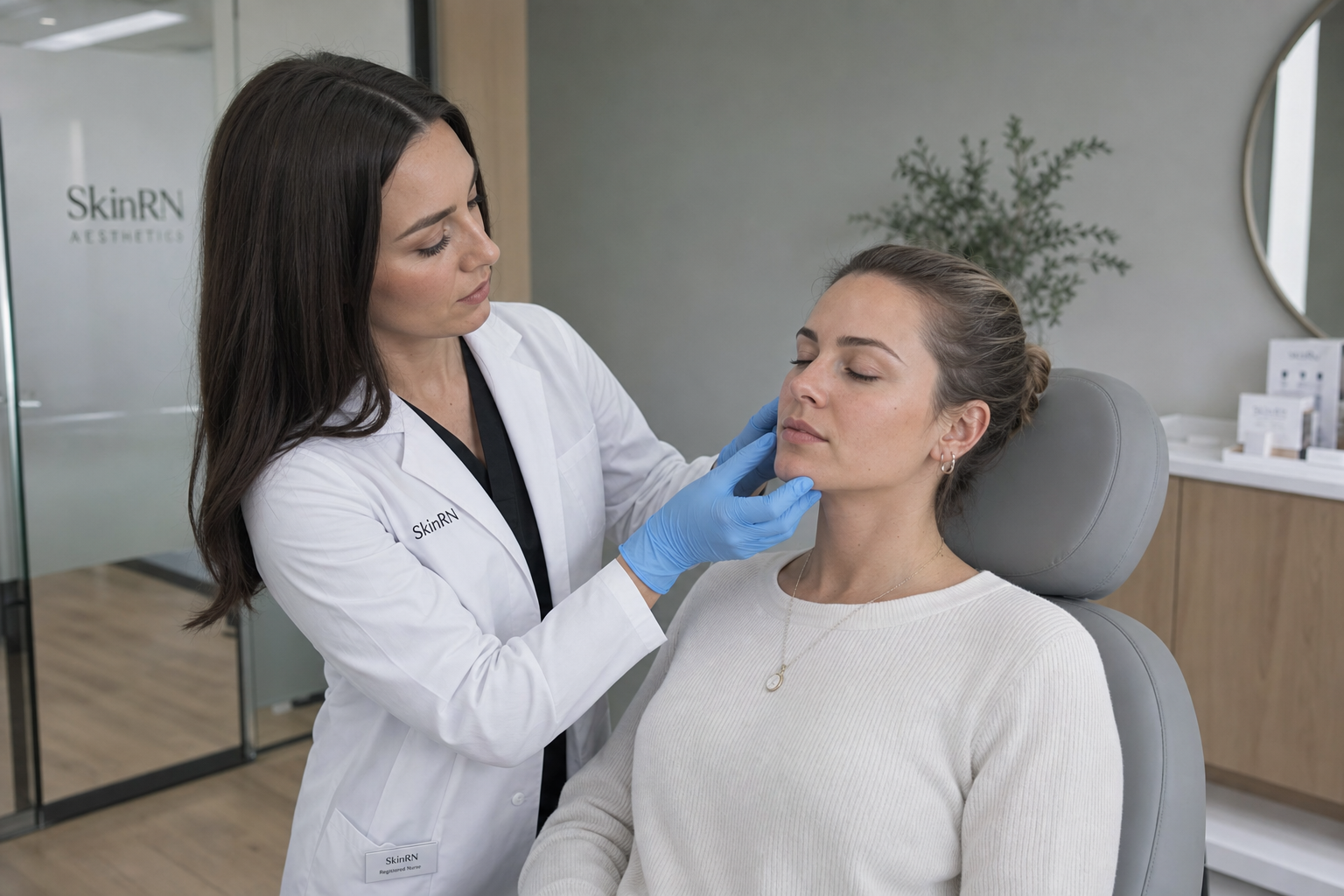
IPL and BBL are both intense pulsed light photofacials that target sun damage and redness. Here's how they differ and how to choose the right one for your skin.
Sun damage and redness are two of the most common concerns we assess in the clinic — and intense pulsed light (IPL) photofacials, including the well-known BBL platform, are among the most effective tools for both. But "IPL" and "BBL" are often used interchangeably online, which creates confusion. This guide explains what actually separates them, and how we think about choosing between them for your skin.
What is the difference between IPL and BBL?
BBL (BroadBand Light) is a specific, advanced type of IPL. All BBL is IPL, but not all IPL is BBL. IPL is the broad category of intense pulsed light technology; BBL is a particular device made by Sciton that offers finer wavelength filters, precise cooling and higher peak power.
Both deliver a broad spectrum of light (not a single laser wavelength) that is absorbed by pigment (melanin) and blood vessels (haemoglobin). That light converts to heat, which breaks down brown spots and reduces the appearance of visible redness. The practical difference is that BBL platforms typically allow more customization and consistency across skin concerns, which matters when a face has both pigment and vascular issues at once.
Which is better for sun damage and brown spots?
Both IPL and BBL effectively treat sun-related brown spots (solar lentigines), but BBL's precise filters and higher energy often clear stubborn or layered pigment in fewer, more comfortable sessions. After treatment, brown spots typically darken into fine "coffee ground" specks over several days, then flake away as the skin renews.
Sun damage is cumulative, so results depend heavily on how much accumulated pigment is present and on ongoing sun protection. Most people need a short series of sessions for even, lasting clearance. These light-based options sit within our lasers and devices offering, and the right protocol is chosen after assessing your skin in person.
Which is better for facial redness and rosacea?
For diffuse redness, flushing and visible vessels, both IPL and BBL work well because they target haemoglobin — but BBL's vascular filters and cooling can make treatment of redness-prone or rosacea skin more comfortable and controlled. Neither cures rosacea, but both can meaningfully reduce its background redness.
Redness treatment is usually a maintenance relationship rather than a one-time fix, since the underlying tendency to flush remains. Managing triggers, gentle skincare and periodic top-up sessions keep results looking calm and even over time.
Does IPL or BBL work on all skin tones?
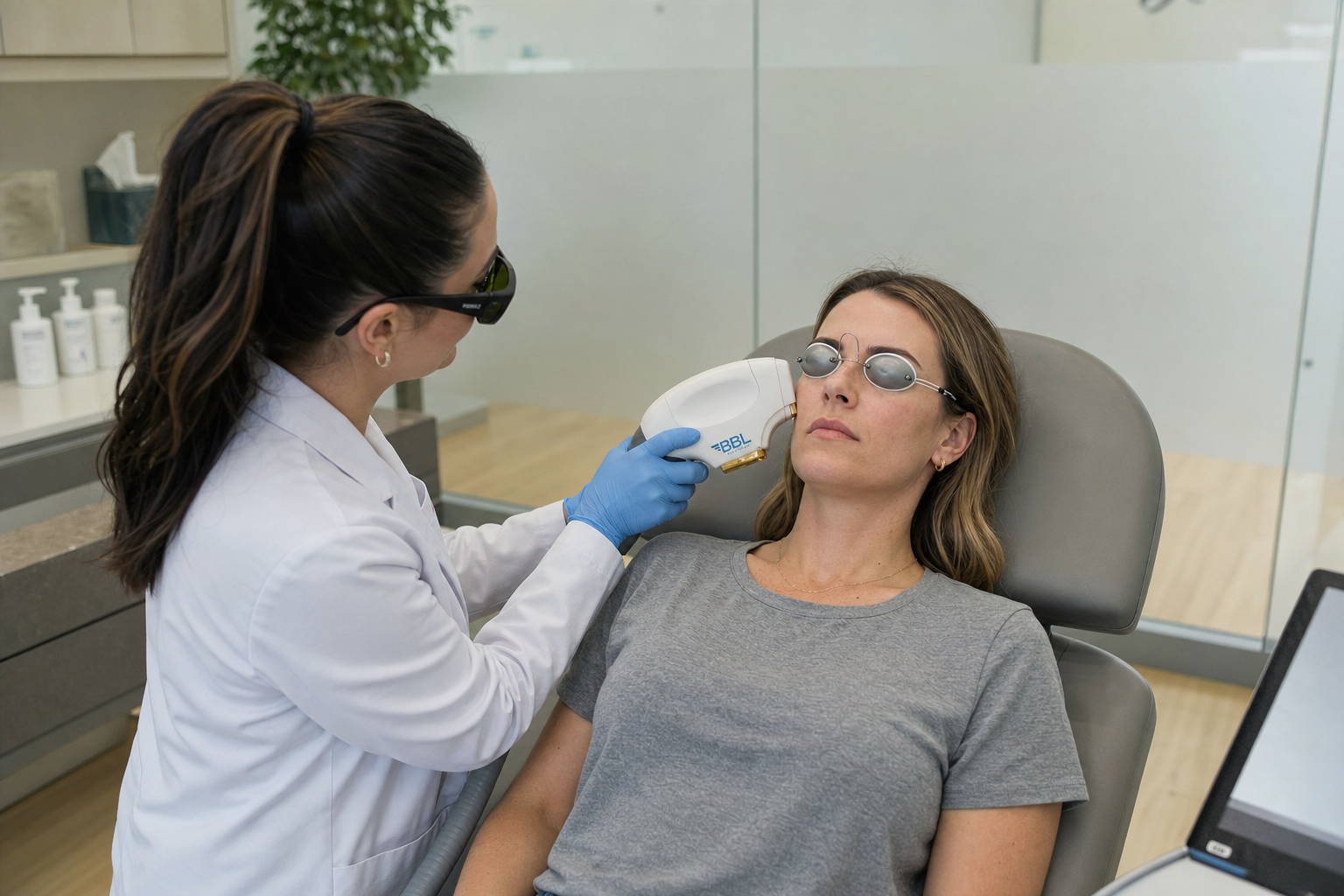
Both IPL and BBL are best suited to lighter to medium skin tones (roughly Fitzpatrick I–III). Because the light targets pigment, deeper skin tones carry a higher risk of burns or post-inflammatory hyperpigmentation, so a thorough assessment is essential.
If your skin tone or concern isn't ideal for IPL/BBL, other resurfacing or device options may be safer and more effective. This is exactly why we assess before recommending anything — and why booking a consultation is the responsible first step.
What does treatment and recovery feel like?
Most people describe the sensation as a warm rubber-band snap, with a cool applicator or air cooling to keep it tolerable. There is usually minimal downtime: expect some redness and warmth for a few hours, and darkened spots for several days if pigment is being treated.
Sun avoidance and daily broad-spectrum SPF are non-negotiable before and after, because treated skin is more sun-sensitive and new sun exposure undoes results. A well-chosen medical skincare and sunscreen routine protects your investment between sessions.
How KatiFACE thinks about photofacials
At our Yorkville clinic, IPL/BBL is rarely the whole story — it's one part of thoughtful, full-face rejuvenation. Sun damage and redness often sit alongside texture, volume or laxity concerns, and we sequence treatments to respect and support your skin rather than overwhelm it.
We keep our practice intentionally small so each plan is genuinely personalized. Individual results vary, and every recommendation follows a proper in-person skin assessment.
FAQ
Frequently asked questions
Is BBL the same as an IPL photofacial?
BBL is a specific, advanced form of IPL made by Sciton. All BBL is IPL, but not all IPL machines are BBL. BBL typically offers finer wavelength filters, integrated cooling and higher peak power for more consistent results.
How many sessions do I need for sun damage?
Most people need a short series — often three to five sessions — for even, lasting clearance, depending on how much accumulated pigment is present. Periodic maintenance helps preserve results. A consultation determines your specific plan.
Is there downtime after an IPL or BBL photofacial?
Downtime is usually minimal. Expect redness and warmth for a few hours, and if pigment is treated, brown spots will darken for several days before flaking away. Strict sun protection is essential afterward.
Can IPL or BBL cure rosacea?
No. Neither treatment cures rosacea, but both can significantly reduce its background redness and visible vessels. Because the tendency to flush remains, redness treatment is typically an ongoing maintenance relationship.
Are IPL and BBL safe for darker skin tones?
IPL and BBL are best suited to lighter to medium skin tones (Fitzpatrick I–III). Deeper skin tones carry higher risk of burns or pigmentation changes, so an in-person assessment is essential before treatment.
Considering treatment? Kati offers thoughtful, personalized consultations in Yorkville.
Reserve Your Consultation