
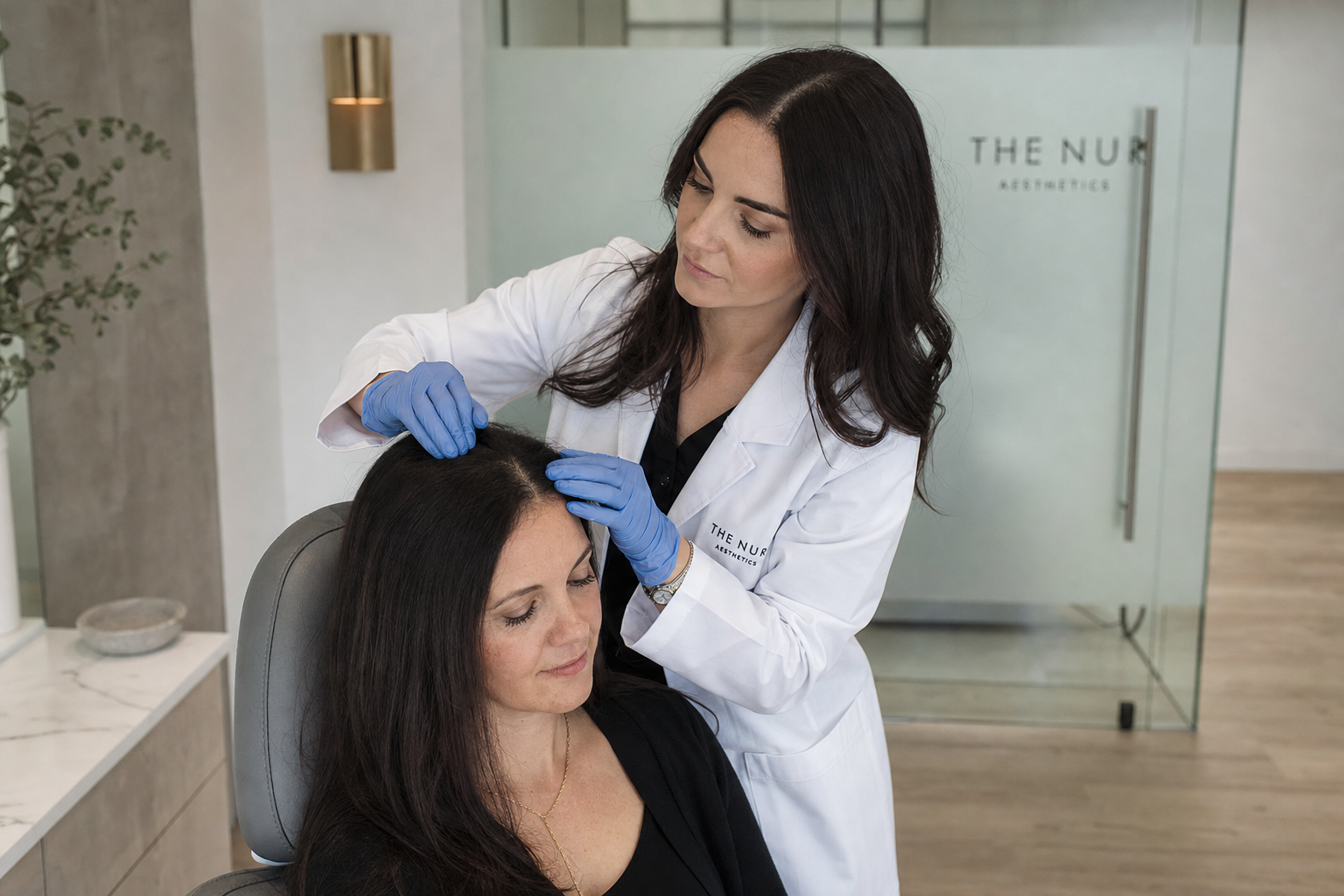
Microchanneling is gaining attention for thinning hair. Here's an honest, evidence-based look at how it works, what results to realistically expect, and how it fits into a full hair-restoration plan.
Hair thinning is one of the most common concerns we hear about at KatiFACE, and microchanneling is increasingly part of that conversation. It's often described as a gentler, more precise cousin of microneedling for the scalp. But does the science actually support it? Here's a calm, honest overview.
What is scalp microchanneling?
Scalp microchanneling is a treatment that uses fine, controlled needle depths to create tiny micro-injuries in the scalp, which can prompt a natural healing and regeneration response around the hair follicles. These micro-channels also allow topical hair-supporting solutions to penetrate more effectively.
Unlike traditional roller microneedling, microchanneling devices typically use a precise vertical stamping motion, which can be more comfortable and consistent across the scalp. At KatiFACE, this is part of our broader hair restoration approach, often combined with regenerative solutions.
How does microchanneling stimulate hair growth?
Microchanneling is thought to encourage hair growth through two main mechanisms: controlled micro-injury that triggers a wound-healing and growth-factor response near follicles, and improved absorption of applied serums such as PRP or peptide-based solutions.
The controlled injury signals the body to increase local blood flow and release growth factors that support the follicle environment. When paired with treatments like PRP (platelet-rich plasma) or exosome-based solutions, the micro-channels help those actives reach the depth where follicles live rather than sitting on the surface.
Is there real scientific evidence?
The strongest published evidence exists for microneedling combined with topical treatments, particularly when paired with minoxidil or PRP. Several small controlled studies have shown improved hair count and thickness in androgenetic alopecia (pattern hair loss) versus topical treatment alone.
That said, the research base is still developing. Study sizes are often small, protocols vary, and microchanneling specifically has less standalone data than the broader microneedling category. This is why we're honest with patients: it can be a valuable component of a plan, but it is not a guaranteed cure, and individual results vary.
Who is a good candidate for scalp microchanneling?
Good candidates are people with early to moderate thinning who still have active follicles, particularly those with androgenetic (pattern) hair loss or diffuse thinning. It works best as part of a consistent, multi-session plan rather than a one-time fix.
Microchanneling is generally less suited to areas that are completely bald with no follicular activity, since it supports existing follicles rather than creating new ones. A proper scalp assessment is essential — some hair loss has medical causes (thyroid, iron, hormonal) that need addressing first. During a consultation, we review your history before recommending anything.
What results can you realistically expect?
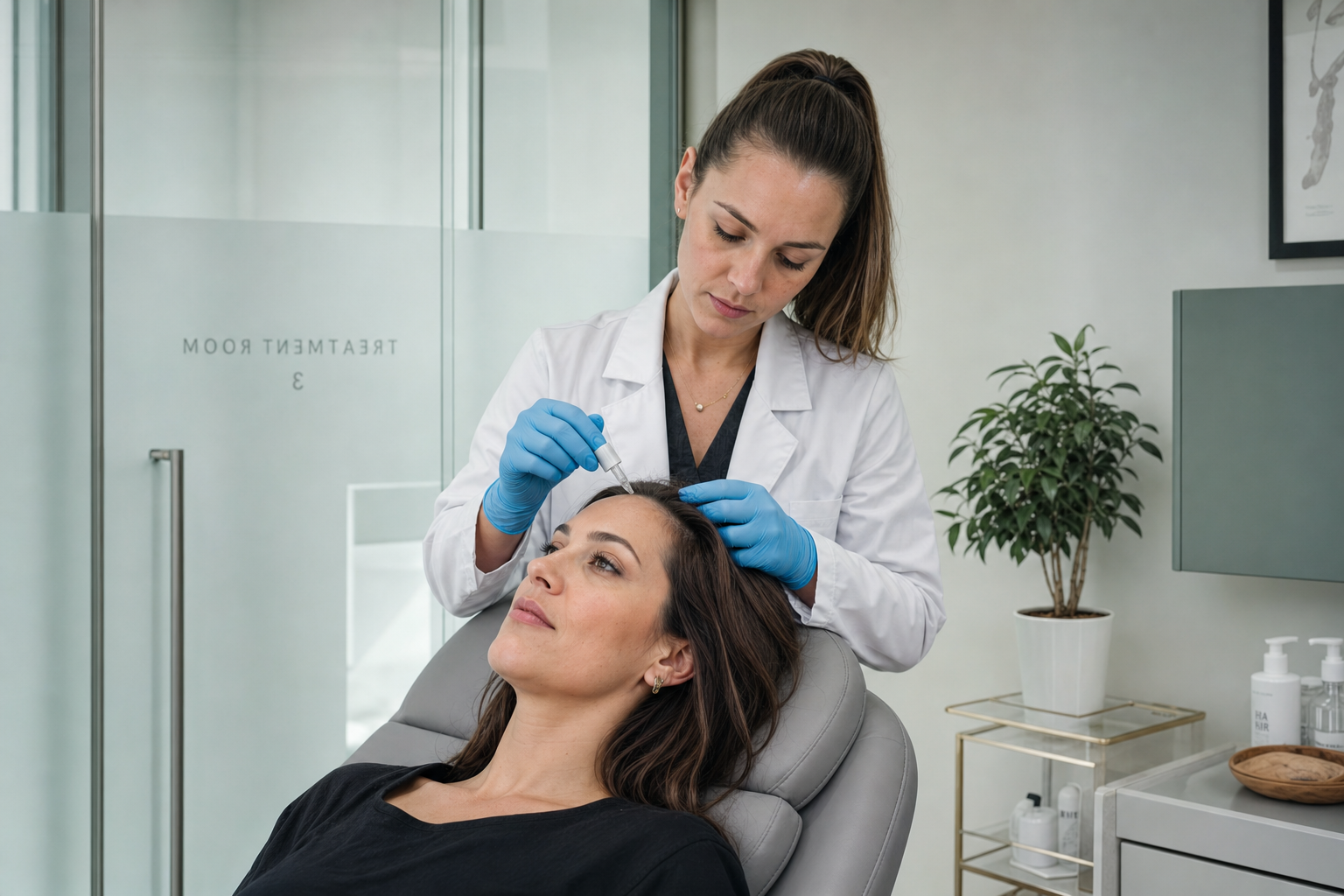
Most people need a series of sessions spaced several weeks apart, with early changes in shedding and texture appearing over the first few months and more visible density changes over three to six months or longer. Hair grows slowly, so patience and consistency matter more than any single treatment.
Realistic goals are typically improved density, reduced shedding, and healthier-looking hair — not a full reversal of significant loss. Maintenance sessions are usually needed to sustain results, because the underlying causes of hair loss don't disappear.
How does microchanneling compare to PRP alone?
The two are complementary rather than competing. Microchanneling creates the delivery pathway, while PRP or exosome solutions provide concentrated growth factors — used together, they aim to be more effective than either alone. Many clinics, including ours, combine them for this reason.
Is microchanneling safe?
When performed by a trained medical professional with sterile technique, scalp microchanneling is generally well tolerated, with temporary redness, mild tenderness, or slight swelling being the most common short-term effects.
Because it involves controlled micro-injury and the application of biologic solutions, technique, hygiene and clinical judgment genuinely matter. As a registered nurse-led practice, KatiFACE prioritizes a thorough assessment and a conservative, individualized approach. If injectables or other treatments are part of your overall aesthetic goals, we can discuss how our full-face and scalp services fit together.
The bottom line
Microchanneling for hair growth has a plausible mechanism and encouraging (if still-developing) evidence, especially when combined with PRP, exosomes or topical actives. It's most effective as one part of a consistent, medically supervised plan — not a standalone miracle. If you're noticing thinning, the best first step is an honest assessment. Book a hair consultation to see whether it's right for you.
This article was reviewed by Kati Head, RN. It is for general education and is not medical advice. Individual results vary — please consult a qualified professional about your specific situation.
Frequently asked questions
How many microchanneling sessions do I need for hair growth?
Most protocols involve a series of sessions spaced several weeks apart, often three to six or more to start, followed by maintenance. Your exact plan depends on your degree of thinning and how you respond, which is determined during a scalp assessment.
Does microchanneling for hair growth hurt?
Most people find it well tolerated. There may be mild tenderness, redness, or a scratching sensation during and shortly after treatment. Comfort measures can be used, and any discomfort typically settles quickly.
How soon will I see results from scalp microchanneling?
Because hair grows slowly, early changes like reduced shedding may appear within a few months, with more visible density changes typically over three to six months or longer. Consistency and patience are key, and results vary between individuals.
Is microchanneling better than PRP for hair loss?
They aren't competitors — they work best together. Microchanneling creates micro-channels that help PRP or other growth-factor solutions reach the follicles more effectively, so many treatment plans combine both.
Who should not get scalp microchanneling?
It may not suit people with active scalp infections, certain skin conditions, bleeding disorders, or completely bald areas with no follicular activity. Some hair loss has underlying medical causes that need addressing first, which is why a professional consultation matters.
Considering treatment? Kati offers thoughtful, personalized consultations in Yorkville.
Reserve Your Consultation