
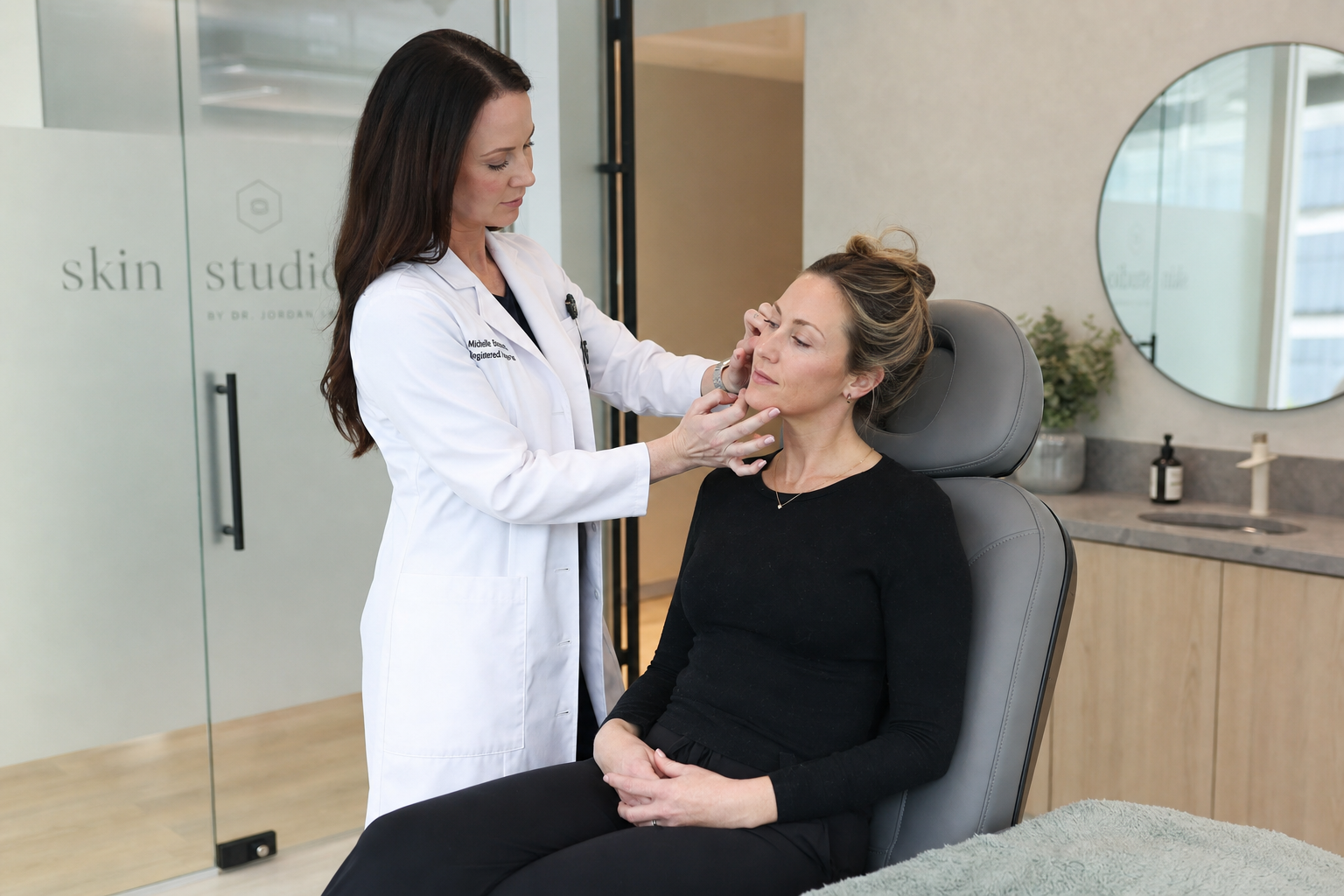
You don't need ten products to age well. Here's how to build a streamlined anti-aging routine around the handful of ingredients that are actually proven to work.
Most anti-aging routines fail not because the products are bad, but because they're too complicated to keep up. The truth is that a small number of well-chosen, evidence-based ingredients — used consistently — will do more for your skin over the years than a bathroom shelf full of serums you use twice and abandon.
At KatiFACE in Yorkville, we believe aging is something to support thoughtfully, not erase. A good routine isn't about chasing a line-free face; it's about protecting your skin barrier, supporting collagen, and keeping your complexion healthy as it changes. Here's how to build one that actually works.
What does an anti-aging routine actually need?
An effective anti-aging routine comes down to four core steps: a gentle cleanser, an antioxidant (vitamin C) in the morning, a retinoid at night, and broad-spectrum sunscreen every day. Everything else is optional refinement.
These four do the heavy lifting because they're the ingredients with the strongest research behind them. If you only ever adopt these, you'll be ahead of most elaborate routines. The rest of this guide explains how and when to use each.
Why is sunscreen the most important anti-aging product?
Sunscreen is the single most effective anti-aging product because up to roughly 80–90% of visible facial aging is linked to cumulative UV exposure. Protecting skin daily prevents the collagen breakdown, pigmentation, and texture changes that treatments later try to correct.
Use a broad-spectrum SPF 30 or higher every morning, year-round — yes, including Toronto winters and cloudy days. Reapply if you're outdoors for extended periods. No serum can out-perform the damage that unprotected daily sun exposure causes over decades. A well-formulated daily sunscreen and medical-grade skincare is the foundation everything else builds on.
When should I use vitamin C?
Use vitamin C in the morning, after cleansing and before sunscreen. It's an antioxidant that helps neutralize free radicals from UV and pollution, supports collagen, and can gradually brighten uneven tone.
Vitamin C and sunscreen are a natural daytime pairing — the antioxidant adds a layer of protection that sunscreen alone doesn't provide. Look for a stable formulation (L-ascorbic acid is well studied) and introduce it slowly if your skin is sensitive.
Why is retinol considered the gold standard for aging skin?
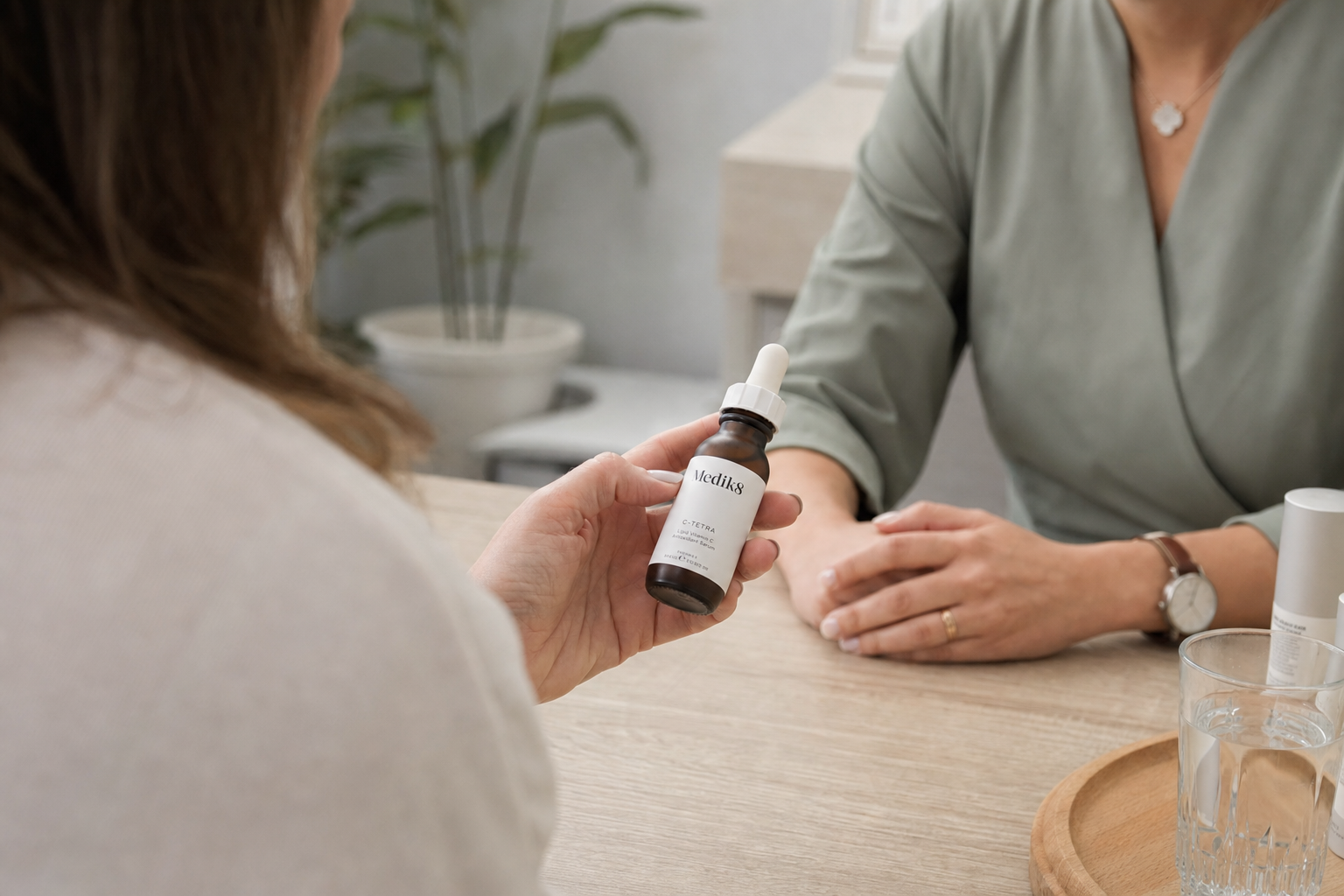
Retinoids (including retinol) are the most studied topical ingredient for aging skin because they speed cell turnover and stimulate collagen production, which can soften fine lines and improve texture over time. Results build gradually over months of consistent use.
Use your retinoid at night, starting two to three times per week and building up as tolerated. Expect some initial dryness or flaking — this is normal and usually settles. Pair it with a simple moisturizer and always wear sunscreen the next day, as retinoids make skin more sun-sensitive. Patience matters more than strength here: consistency over 12 weeks beats an aggressive start you can't sustain.
What's the correct order to apply skincare?
Apply products from thinnest to thickest consistency. A simple reliable order is: morning — cleanser, vitamin C, moisturizer, sunscreen; night — cleanser, retinoid, moisturizer.
That's genuinely all most people need. Hydrating serums, eye creams, and exfoliating acids can be layered in, but they're supporting players — add them only if they solve a specific problem and you'll realistically keep using them.
When does a routine need professional support?
Topical skincare maintains and protects, but it can't replace lost volume, stimulate collagen as dramatically, or correct deeper pigmentation and laxity. When your goals go beyond what creams can deliver, in-clinic treatments become the next layer.
For example, laser and energy-based devices address pigmentation, texture, and pores more effectively than any serum; collagen-stimulating biostimulators help with gradual volume loss; and injectable treatments can soften specific expression lines. The best outcomes come from pairing a solid home routine with targeted professional care — which is exactly the full-face, personalized approach we take. If you're not sure where your skincare ends and treatment begins, book a consultation and we'll map a realistic plan.
How long before an anti-aging routine shows results?
Most people see improved hydration and glow within a few weeks, but meaningful changes in fine lines and texture from retinoids and vitamin C typically take 12 weeks or more. Anti-aging skincare is a long game — consistency is the active ingredient.
Individual results vary with skin type, age, genetics, and sun habits. If a product irritates your skin or you have a medical condition, pause and consult a qualified professional before continuing.
FAQ
Frequently asked questions
Can I use retinol and vitamin C together?
Yes, but it's simplest to separate them — vitamin C in the morning and retinol at night. This minimizes irritation and lets each work when it's most useful, with vitamin C pairing naturally under daytime sunscreen.
Do I really need sunscreen every day, even in winter?
Yes. UVA rays, which drive much of skin aging, penetrate cloud and glass and are present year-round in Toronto. Daily broad-spectrum SPF 30+ is the most important step in any anti-aging routine.
Is an expensive skincare routine better?
Not necessarily. What matters is the ingredients and consistency, not the price. A simple routine with proven actives — sunscreen, vitamin C, a retinoid — outperforms an elaborate, inconsistent one. Medical-grade formulations can offer higher, better-stabilized concentrations, which is where professional guidance helps.
At what age should I start an anti-aging routine?
Daily sunscreen is worth starting as early as possible, as prevention is far easier than correction. Many people add antioxidants and a gentle retinoid in their late twenties to thirties, but the right time depends on your skin and goals — a consultation can clarify what's appropriate for you.
Can skincare alone reverse deep wrinkles or sagging?
No. Topical products maintain, protect, and gradually improve skin, but they can't replace lost volume or significantly tighten lax skin. Deeper concerns are better addressed with in-clinic treatments alongside a good home routine.
Considering treatment? Kati offers thoughtful, personalized consultations in Yorkville.
Reserve Your Consultation