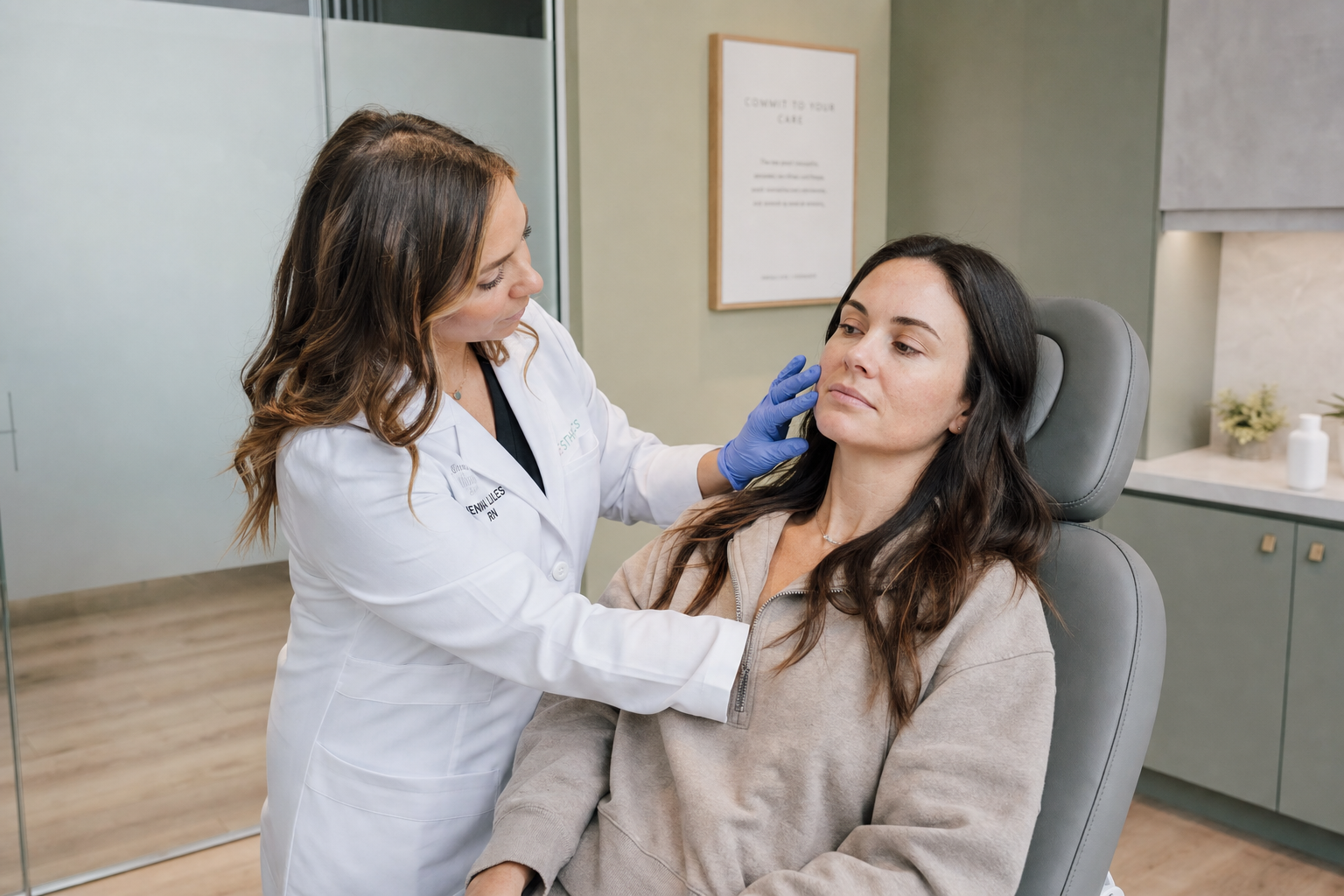
Skin boosters and dermal fillers both use hyaluronic acid, but they do very different jobs. Here's how to tell them apart and choose wisely.
What are skin boosters?
Skin boosters are injectable treatments that deliver hyaluronic acid (and sometimes added vitamins or antioxidants) into the skin to improve hydration, elasticity, and overall skin quality. Unlike filler, they are not designed to add volume or reshape features — think of them as an "injectable moisturizer" that works from within.
Hyaluronic acid is a substance your skin makes naturally to hold water. Skin boosters place a lighter, more spreadable form of it into the superficial layers of the skin, drawing in moisture and gently prompting the skin to produce more of its own collagen and hyaluronic acid over time.
How are skin boosters different from dermal filler?
The core difference is the job each one does: filler adds structure and volume, while skin boosters improve the quality and hydration of the skin itself. Both are usually made from hyaluronic acid, but they are formulated and placed very differently.
Filler: volume and structure
Dermal filler is a firmer, more cohesive gel placed deeper — often on or near bone or in specific tissue planes — to restore lost volume, lift, and definition. It's used to soften a nasolabial fold, refine a jawline, add support to cheeks, or shape lips. Filler holds its shape to create a physical result.
Skin boosters: hydration and glow
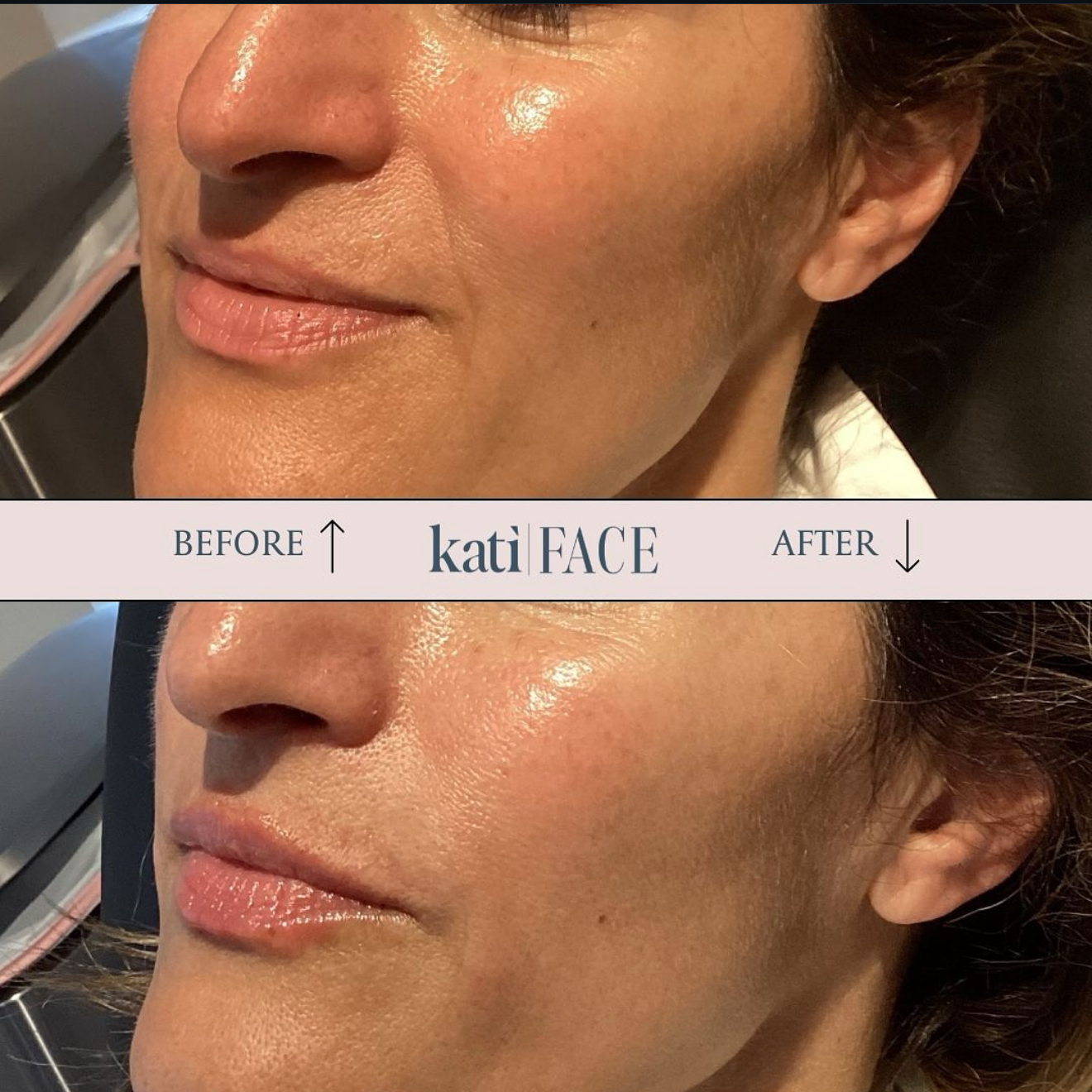
Skin boosters use a thinner, more fluid HA that spreads through the skin rather than holding a defined shape. The goal isn't to lift or contour — it's to soften fine crepey lines, improve smoothness and radiance, and give skin a hydrated, healthy "glow-from-within" look. Results are subtle and skin-quality focused rather than structural.
What skin concerns do skin boosters help with?
Skin boosters are best for dehydration, dullness, fine crepey texture, and early loss of skin elasticity. They are commonly used on the face, neck, under-eye area, décolletage, and hands.
Good candidates often notice:
- Skin that looks dull, tired, or dehydrated
- Fine, crepey lines that aren't deep folds
- Loss of that natural bounce and glow
- A desire for improvement without visible volume change
They pair well with a broader plan. Many clients combine boosters with energy-based treatments like lasers and microneedling for texture and tone, or with collagen-stimulating biostimulators when there's more meaningful volume loss to address. A full-face assessment is the best way to decide what your skin actually needs.
How long do skin boosters last?
Skin booster results typically last around 4 to 9 months depending on the product, the area treated, your skin, and your metabolism. Because they improve skin quality rather than sit as a shaped gel, results build gradually and are usually maintained with periodic sessions.
Most protocols involve an initial series of 2 to 3 treatments spaced a few weeks apart, followed by maintenance one to two times a year. Filler, by comparison, is often placed in a single session and can last from several months to over a year depending on the product and area.
Can you have skin boosters and filler at the same time?
Yes — they address different things and are often used together as part of a thoughtful, full-face plan. Filler restores structure where it's been lost, while skin boosters refine the quality of the skin sitting over that structure.
At KatiFACE, our approach is to support how your face ages rather than erase it, which usually means combining treatments strategically rather than relying on any single one. Whether boosters, filler, or both are right for you is a clinical decision best made in person. You can book a consultation to map out a plan suited to your skin and goals.
What does treatment feel like and is there downtime?
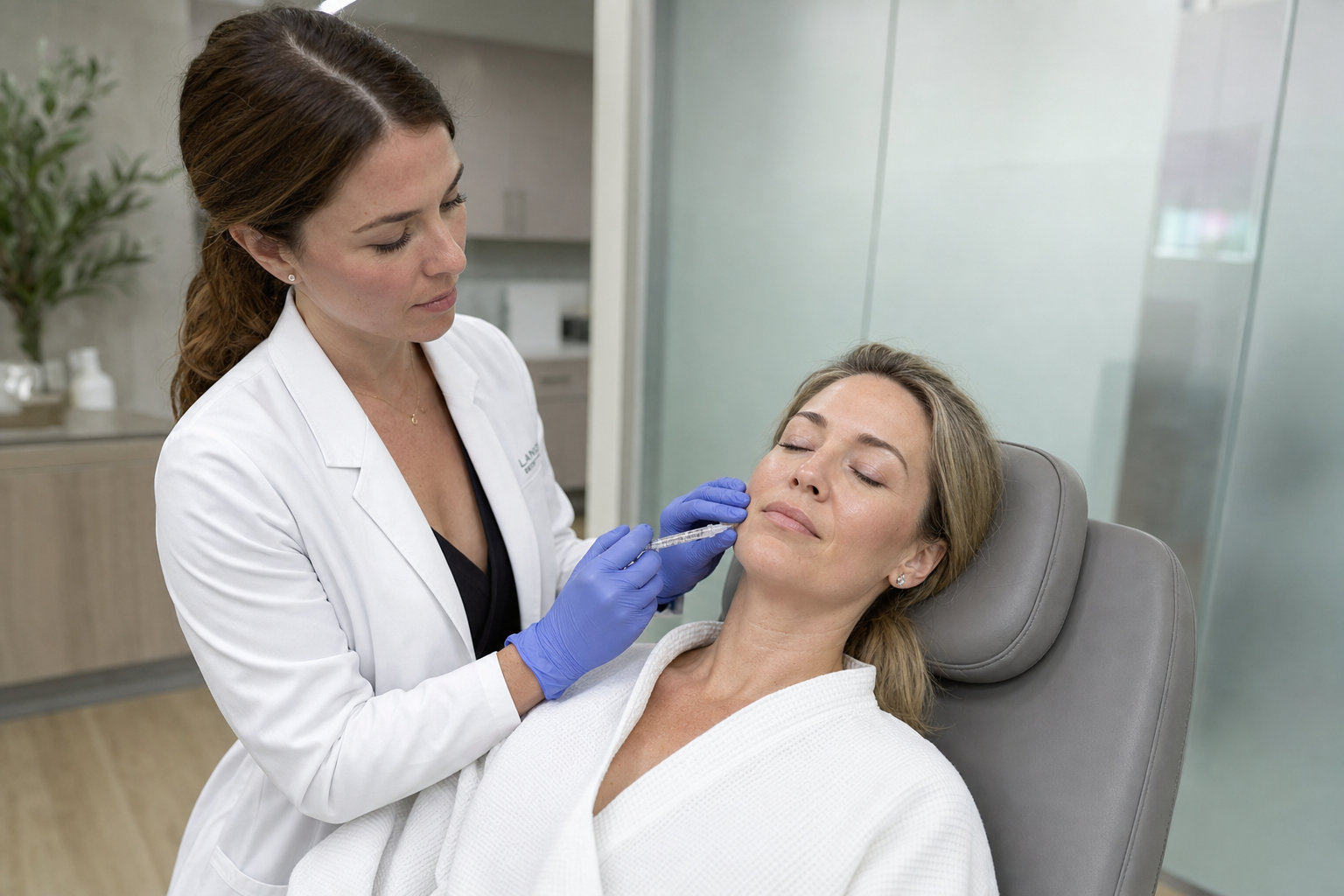
Skin boosters involve a series of tiny injections across the treatment area, usually with topical numbing for comfort. Downtime is generally minimal — small bumps, redness, mild swelling, or occasional bruising that settles within a few hours to a few days.
As with any injectable, individual results and reactions vary, and treatment should always be performed by a qualified medical injector after a proper assessment of your skin and health history.
Are skin boosters right for everyone?
Skin boosters are a good option for many people wanting healthier-looking skin, but they aren't a substitute for volume replacement, skin tightening, or a solid skincare routine. They work best as one part of a personalized plan.
A thorough consultation with an experienced injector will clarify whether your concerns are best addressed with boosters, filler, energy-based devices, medical-grade skincare, or a combination. This is the safest and most effective path — especially for YMYL health decisions where individual outcomes vary.
Frequently asked questions
Are skin boosters the same as filler?
No. Both are usually made from hyaluronic acid, but filler adds volume and structure while skin boosters improve hydration, elasticity, and overall skin quality without reshaping features.
How many skin booster sessions do I need?
Most protocols start with a series of 2 to 3 sessions spaced a few weeks apart, followed by maintenance one to two times per year. Your injector will tailor this to your skin.
Do skin boosters plump the skin like filler?
Not in the same way. Skin boosters hydrate and refine skin quality for a smoother, glowier look, but they don't add contour or lift the way structural filler does.
Is there downtime after skin boosters?
Downtime is usually minimal. You may see small bumps, redness, mild swelling or occasional bruising that resolves within a few hours to a few days. Individual reactions vary.
Can skin boosters and filler be combined?
Yes. They're often used together — filler restores lost structure while boosters improve the quality of the skin over it. A consultation determines the right combination for you.
Considering treatment? Kati offers thoughtful, personalized consultations in Yorkville.
Reserve Your Consultation